
How to Start a Tuition Center in Singapore: Complete Step-by-Step Guide
From registering your business to filling your first 20 students - a practical guide to starting a tuition center in Singapore from scratch.
 Corinna Hu· Content Strategist at Integratr.ai·April 12, 2026·8 min read
How to Start a Tuition Center in Singapore: Complete Step-by-Step Guide
Starting a tuition center in Singapore is one of the more accessible education businesses to launch - you don't need a physical facility, large upfront capital, or formal teaching credentials for most center types. But running one profitably from day one requires understanding what most first-time operators discover the hard way.
This guide covers what you actually need to start and run a tuition center in Singapore - from business registration to your first 20 students.
Step 1: Register Your Business
Before anything else, register your business with ACRA (Accounting and Corporate Regulatory Authority of Singapore).
Common structures for tuition centers:
- Sole proprietorship - Simplest to set up, but you have unlimited personal liability. Suitable if you're testing the market.
- Partnership or LLP - Gives you a partner and shared liability. Common for co-founder setups.
- Private limited company - More admin work and cost, but separate legal entity and limited liability. Recommended once you're past the testing phase.
Register at ACRA's BizFile+ portal. Costs start from S$50 for sole proprietorships. A private limited company costs around S$300-500 to incorporate with a corporate secretarial service.
Business activity code: Add "Education Support Services" or "Tuition Services" to your ACRA registration.
GST registration: Not required until your annual turnover exceeds S$1 million. Most new tuition centers don't need to register.
Step 2: Understand the Regulatory Requirements
Singapore's tuition center regulations are relatively light compared to formal schools, but there are requirements worth knowing:
For centers with 10+ students: You may need to register with the Ministry of Education (MOE) depending on the nature of your classes. Check MOE's guidelines for private tuition centers - the rules cover safety, class sizes, and educator qualifications for certain program types.
Fire safety: If you're renting a commercial space, ensure it meets fire safety requirements. A qualified person can advise on maximum occupancy and exit requirements.
** signage and advertising:** Your space should clearly display your business registration number. Avoid implying MOE endorsement unless your center is formally registered.
CPFB (Child Protection): If you're working with children, ensure your staff have undergone background checks. Familiarize yourself with the Children's Outdoor Playgrounds Act if applicable.
Step 3: Choose Your Business Model
Before you rent space or build a schedule, decide what kind of tuition center you're running:
Academic tuition center - Primary and Secondary exam preparation (EMaths, Chemistry, Physics, English). The most common model. Targets PSLE, O-Level, and A-Level students.
Enrichment center - Robotics, art, music theory, languages. Often higher ticket price per student but smaller market.
Specialized test prep - SSAT, SAT, IELTS, AEIS. Higher fees but narrower market.
Most new operators start with academic tuition because the demand is consistent and predictable. If you're a former school teacher or have strong subject knowledge, this is the most natural fit.
Step 4: Set Up Your Location
You don't need a large space to start. Many successful centers in Singapore launch in:
- HDB flat living rooms (with permission from HDB)
- Small commercial units (100-300 sq ft is enough for 10-20 students)
- Co-working spaces with teaching rooms
- Home-based (for early-stage testing)
What your space needs:
- Enough chairs/desks for your planned class size
- Good lighting and ventilation
- A door or screen for privacy during classes
- Reliable internet for any digital tools you use
Cost range: HDB units can cost S$1,500-2,500/month to rent. Commercial units vary widely by location. Home-based testing costs you nothing but limits your ability to scale.
Step 5: Build Your Curriculum and Schedule
This is where most first-time operators underestimate the work.
Curriculum planning:
- Decide which subjects and levels you'll offer (e.g., Secondary 3 EMaths, Primary 6 English)
- Create a scope and sequence for each - what gets taught when
- Prepare materials for at least the first term before you launch
Schedule design:
- Weekday evenings (4pm-9pm) are peak hours for tuition in Singapore
- Saturday mornings are popular for some programs
- Sunday is generally available but operator preference varies
Class size: Start with small groups (4-8 students per class) to manage quality. Expand as you build referral traffic.
Step 6: Set Your Pricing
Singapore tuition center pricing varies widely. Here's a realistic range for 2026:
| Format | Hourly Rate (SGD) |
|---|---|
| Primary school (P1-P6) | S$35-60/hr |
| Secondary school (S1-S4) | S$45-80/hr |
| JC/H2 subjects | S$55-90/hr |
| Small group (up to 6) | S$25-45/hr per student |
Setting your price: Don't start by competing on price. Start by knowing your costs. At 20 students averaging S$400/month, you need at least S$8,000/month in revenue to cover a small unit, your time, and materials.
Factors that justify higher prices:
- Strong subject credentials (former MOE teachers, degree holders in the subject)
- Track record of results
- Small class sizes (under 6 students)
- Convenient location
Step 7: Set Up Your Operations Infrastructure
Here's what most first-time operators don't plan for: the admin work will grow faster than your student count.
Before you launch, set up:
Student management - How will you track enrollment, attendance, and billing? A spreadsheet works at 10 students. At 20, you'll want something more structured.
Parent communication - How will you message parents? WhatsApp is common but unwieldy at scale. Consider a system that keeps parent communication organized and separate from your personal messages.
Billing and payment collection - How will parents pay? PayNow, bank transfer, or cash? How will you track what's paid and what's outstanding?
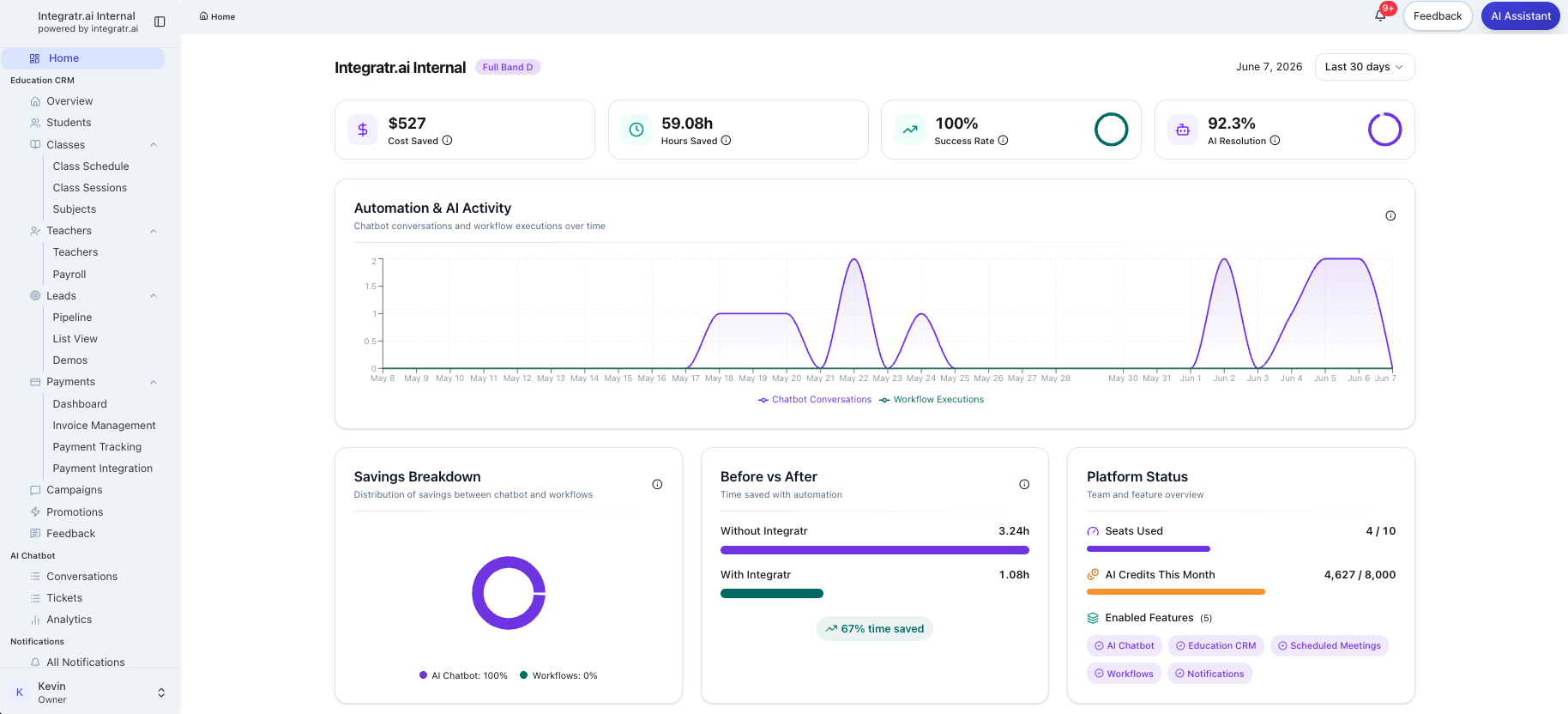
This is where most operators spend too much time. A centralized system for attendance, billing, and parent communication reduces the admin burden enough that you can focus on teaching, not managing.
Step 8: Marketing and Getting Your First Students
Start with your network. First students usually come from referrals, Facebook groups for parents, and your existing contacts. Don't spend money on ads before you have operational proof that your model works.
Online presence that matters:
- A simple website with your subjects, pricing, and contact (even a one-page site)
- A WhatsApp Business account for enquiries
- Google Business Profile (free and surprisingly effective for local tuition centers)
What to avoid early:
- Expensive Google Ads before you've refined your offering
- Large-scale social media campaigns
- Discounting your prices to fill seats (devalues the market for everyone)
A more effective sequence: Get 5-10 students from your network → refine your delivery → ask for referrals → fill the remaining seats from organic enquiries.
Step 9: Manage Growth Thoughtfully
The biggest mistake new operators make is taking on too many students too quickly without the infrastructure to handle them.
Signs you're ready to grow:
- You're turning away enquiries because you're at capacity
- Parents are asking if you have other subjects or levels
- Your referral rate is high enough that you don't need to advertise
What to build before you scale:
- A system for tracking student progress (not just attendance)
- A staff hiring and training process (if you're bringing in tutors)
- Clear onboarding for new students so they're not starting cold
Frequently Asked Questions
How much does it cost to start a tuition center in Singapore? Minimum viable cost for a home-based center: close to zero (just your time). For a small commercial unit with 10-20 students: S$2,000-5,000/month in rent plus S$1,000-2,000 in setup costs (furniture, materials, software). A full commercial launch typically requires S$10,000-20,000 in upfront costs.
Do I need teaching qualifications to start a tuition center in Singapore? No formal teaching qualification is legally required to run a private tuition center in Singapore (unlike formal schools). However, strong subject knowledge and the ability to demonstrate results are what parents pay for. Former MOE teachers or degree holders in relevant subjects have a natural credibility advantage.
How many students do I need to make a tuition center profitable? At S$400-500/month average fees per student, you need roughly 20-25 students to cover a small commercial unit and your time at a basic operator salary. 40+ students is where most operators feel the business is genuinely profitable.
What software should I use to run a tuition center? Look for software that handles attendance, billing, parent communication, and scheduling in one platform. Integratr.ai is built for tuition centers in Singapore and Malaysia, with WhatsApp Business integration, automated invoicing, and attendance tracking. Plans start at S$149/month.
Ready to set up your tuition center operations the right way? Integratr.ai helps new and growing tuition centers in Singapore run attendance, billing, scheduling, and parent communication from one dashboard.
Book a free demo at integratr.ai or see our pricing.
Want to see how automation can work for your business?